
If you only take one thing from this: book a hot tub break for autumn or winter, not summer. The colder the air against your skin, the better the hot water feels, and the same lodge that costs a fortune in August often drops sharply once October hits. Below is the month-by-month case for why.
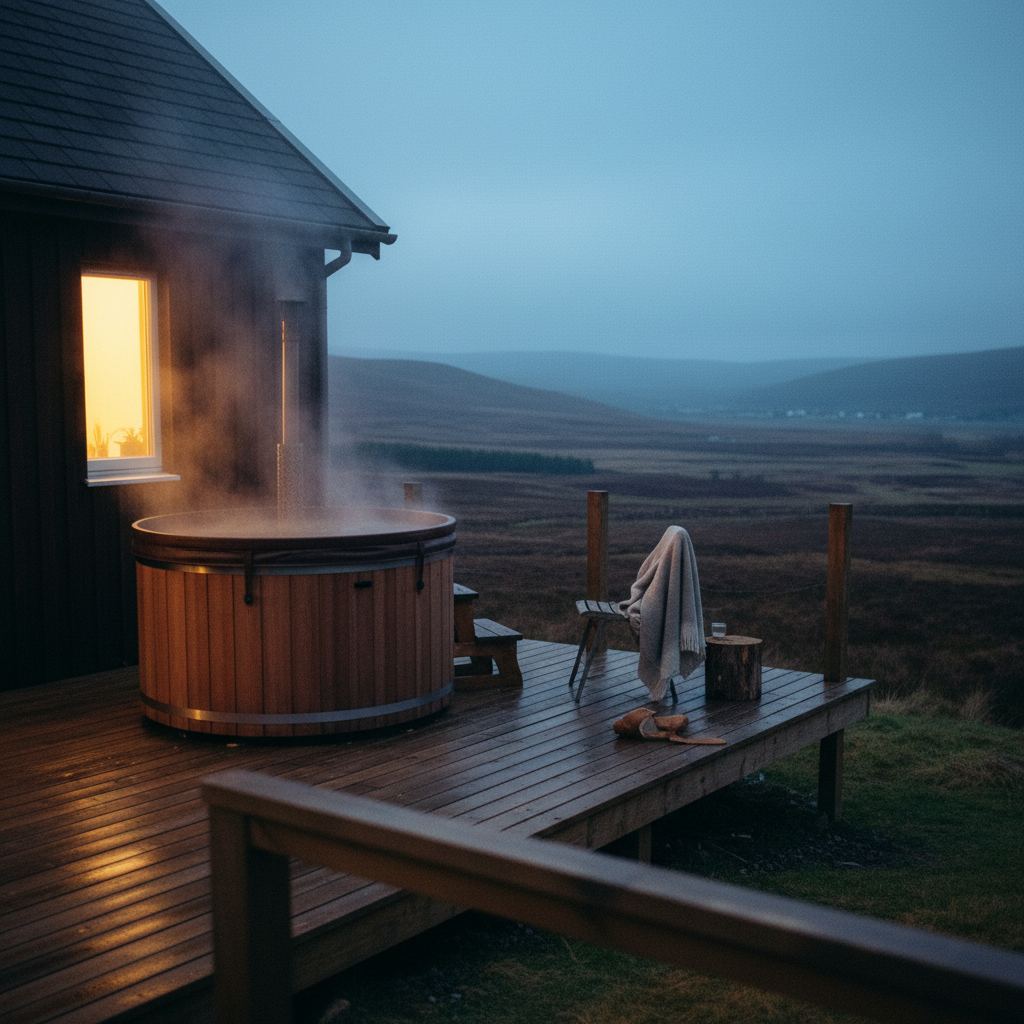
What’s genuinely the best time of year for a hot tub break?
Late October through to February, with a soft spot for a properly frosty weekend in November or January. That’s not a marketing line — it’s just physics and economics working in the same direction at once. Cold air makes the water feel hotter by contrast, and the low season is when hot tub lodges in places like the Lake District actually have availability without you booking eleven months out.
Summer isn’t a bad time, exactly. It’s just the least distinctive one. A hot tub on a warm July evening is nice. A hot tub on a February evening with frost forming on the decking rail an inch from your elbow is the one you’ll still be talking about at Christmas.
Why does timing matter this much for a hot tub specifically?
Because a hot tub is one of the few holiday features where the weather working against you is actually the point. A pool, a walk, a picnic — all of those want good weather. A hot tub wants the opposite: cold enough that getting in feels like a genuine escape, not just a warm bath on a warm day. That’s the whole reason the “best” time of year for this kind of trip runs backwards from most UK travel advice, which is usually chasing sunshine.
There’s also a supply-and-demand story running underneath it. Hot tub lodges, especially in popular spots like the Lake District, get booked out for summer weekends and school holidays many months ahead. The exact same property, a few weeks either side of those dates, often has open availability and a noticeably lower price — not because it’s a worse lodge, but because fewer people are looking at those dates.
Month by month: what to expect
| Month | What it’s like | Booking tip |
|---|---|---|
| Jan–Feb | Cold, often crisp and clear; quietest lodges of the year | Best value outside a bank holiday weekend |
| March | Unpredictable — can still feel like deep winter | Good for last-minute deals if forecasts look cold |
| April–May | Milder, lighter evenings, lambing season in the Dales and Lakes | Easter week gets busy and pricier fast |
| June–Aug | Warm, long daylight, hot tub feels least dramatic | Book months ahead for anywhere popular; expect peak pricing |
| Sept | Often underrated — settled weather, kids back at school | One of the best-kept-secret months for value |
| Oct | Proper autumn: colours turning, evenings drawing in | Half-term pushes prices up for one week |
| Nov | Cold, dark early, brilliant for hot tubs | Quiet and often the cheapest month of the year |
| Dec | Christmas markets and lights, but Christmas week itself is priced accordingly | Book the two weeks either side of Christmas for better value |
Why does autumn and winter beat summer for a hot tub?
Three reasons, and none of them are complicated. First, contrast — stepping from a cold garden into 38°C water is a much bigger sensation in December than in July, when the air’s already warm. Second, the evenings are longer in the dark months, so you get proper darkness and stars overhead by five or six o’clock rather than waiting until gone ten in June. Third, cost: demand for self-catering breaks in the UK tracks school holidays closely, and a hot tub lodge that’s booked solid every summer weekend often has plenty of space on a random Tuesday in November.
A hot tub in July competes with the sunshine outside it. A hot tub in December has nothing to compete with — it just wins.
There’s a practical daytime case for the cold months too, especially somewhere like the Lakes. Fell paths are quieter, pub fires are lit, and you’re not sharing the view from the top of a walk with fifty other people doing the same loop. If wet-weather planning is putting you off, it needn’t — pack for it properly and the Lake District in November is one of the better-value weekends in UK travel.
Does the Lake District have its own seasonal quirks?
A couple, yes. Ullswater and the northern fells around Keswick hold onto snow on the tops longer into spring than you might expect, which is glorious for the view from a hot tub but worth checking if you’re planning a serious walk rather than just a stroll — winter hillwalking here needs the right kit and, on the higher fells, the right experience. Windermere itself gets genuinely busy from Easter right through to early September, with traffic on the main routes to match, so a lodge slightly off the main tourist corridor — around the Langdales, say, or up towards Keswick — tends to give a calmer trip even in the busier months.
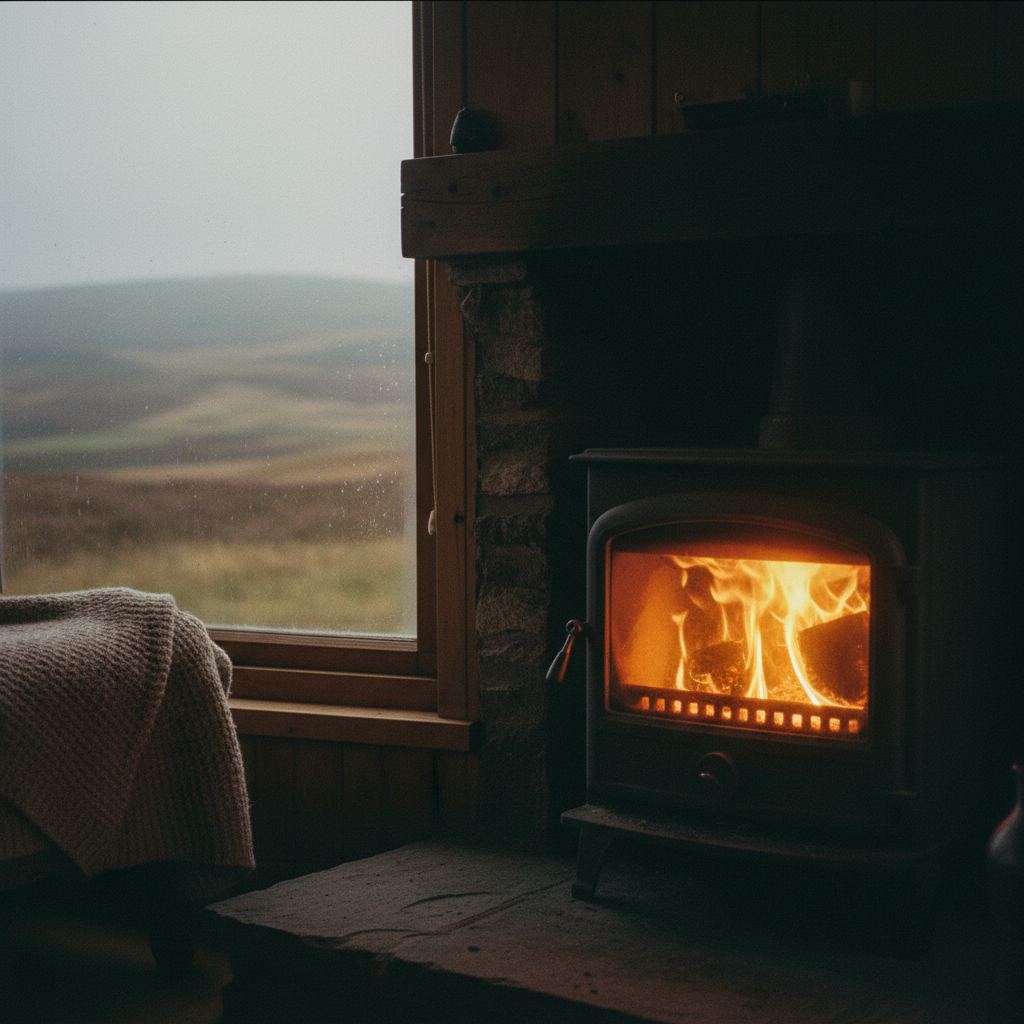
Low winter light is worth planning around too. Days are properly short by December, so build any fell walk around the middle of the day and leave the hot tub for after dark — which, if anything, is when it’s at its best. A star-filled sky over Ullswater with steam rising off the water is hard to beat.
Is there a genuinely bad time to go?
Not bad, exactly, but a couple of periods need managing. Christmas week and New Year’s Eve carry a heavy premium and get booked up early if you want a specific lodge. Half-terms (particularly the October and February ones) spike prices for exactly one week either side of quieter weeks — shift your dates by seven days either way and you’ll often see a real difference. And deep winter in remote spots can mean icy access roads, so if you’re heading somewhere properly rural, check the property’s own advice on winter access before you commit.
Beyond that, there isn’t a dud month. Even a wet March weekend by a hot tub with a book and a wood-burner going is a perfectly good way to spend two days.
What does a typical cold-weather hot tub day actually look like?
Worth painting the picture, since “best time of year” advice means little without knowing what you’re actually signing up for. A good winter hot tub day tends to run: a later start than you’d plan in summer, since there’s no rush to beat the heat; a walk or a couple of hours outdoors while there’s still daylight, wrapped up properly; back to the lodge as it gets dark, which by December can be as early as four o’clock; a hot meal, ideally something that’s been slow-cooking while you were out; and then the tub, after dark, with the whole evening still ahead of you.
That last part is the bit summer can’t really compete with. A July hot tub is one option among many for a warm evening — you could just as easily sit outside with a drink and feel the same temperature. A December hot tub, with frost forming on anything not submerged and your own breath visible in the light spilling from the lodge windows, is the entire point of the evening. Nothing else on offer feels remotely as good.
Where a winter hot tub break works best
The setting matters as much as the month. A cosy log cabin or a lodge with a private hot tub on the deck is the classic winter choice — timber holds the heat, the wood-burner takes the edge off, and a bubbling hot tub under a frosty sky is what these breaks are for. Cottages with hot tubs work just as well if you want more room, and a big holiday park lodge suits families who want a pool and somewhere for the kids on a wet afternoon.
Wherever you book across the UK, the winter version is the same: a day out in the cold, an idyllic soak after dark, and somewhere warm to unwind with nowhere to be. A hot tub holiday in December is one of the simplest getaways left in the country, and most of the lodges with hot tubs and dog friendly cottages we list keep their accommodation open and heated right through the coldest months.
A quick seasonal checklist before you book
- Cold-weather trip: pack a thick robe, proper slippers and a hat for the walk between tub and door — this matters more than people expect.
- Shoulder-season trip (Sept, March): check the specific week against school holiday dates; a one-week shift either way changes the price and the crowd.
- Peak summer: book early if you want choice of lodge, and don’t expect the tub itself to feel as special as it will in January.
- Any season: confirm the lodge is heated and genuinely open for your dates — most are, but very remote sites sometimes aren’t.
- Booking a specific week: check it against the school holiday calendar for your target region — a single week’s shift either side of a half-term can mean a noticeably different price for the same lodge.
- Travelling far for the weekend: build in a little slack for winter driving conditions on rural roads, especially anywhere hilly, and check the property’s own notes on winter access if it’s genuinely remote.
Where to start looking
Our full list of UK hot tub lodges covers every region, but if the Lake District’s fells-and-lakes combination is calling, the hot tub lodges we rate around the Lakes is the place to start. Book for a cold month if you can — it’s the one piece of advice in this whole guide worth actually following.