
Right, let’s get the obvious question out of the way first: is a hot tub break actually worth it, or is it just a photo for the group chat? Booked well, it’s the second thing — an evening spent up to your shoulders in hot water while the rest of the country is huddled indoors is genuinely one of the best-value luxuries left in UK travel. Booked badly, you end up in a static caravan with a lukewarm inflatable ring and a view of the car park.
We’ve spent a fair bit of time working out the difference, and most of it comes down to five things: a properly private tub, the right region for what you actually want to do in the day, honesty about dogs, picking the right season, and knowing the basic etiquette so the whole thing doesn’t feel awkward. Here’s the lot, in plain terms.
What actually makes a good private hot tub stay?
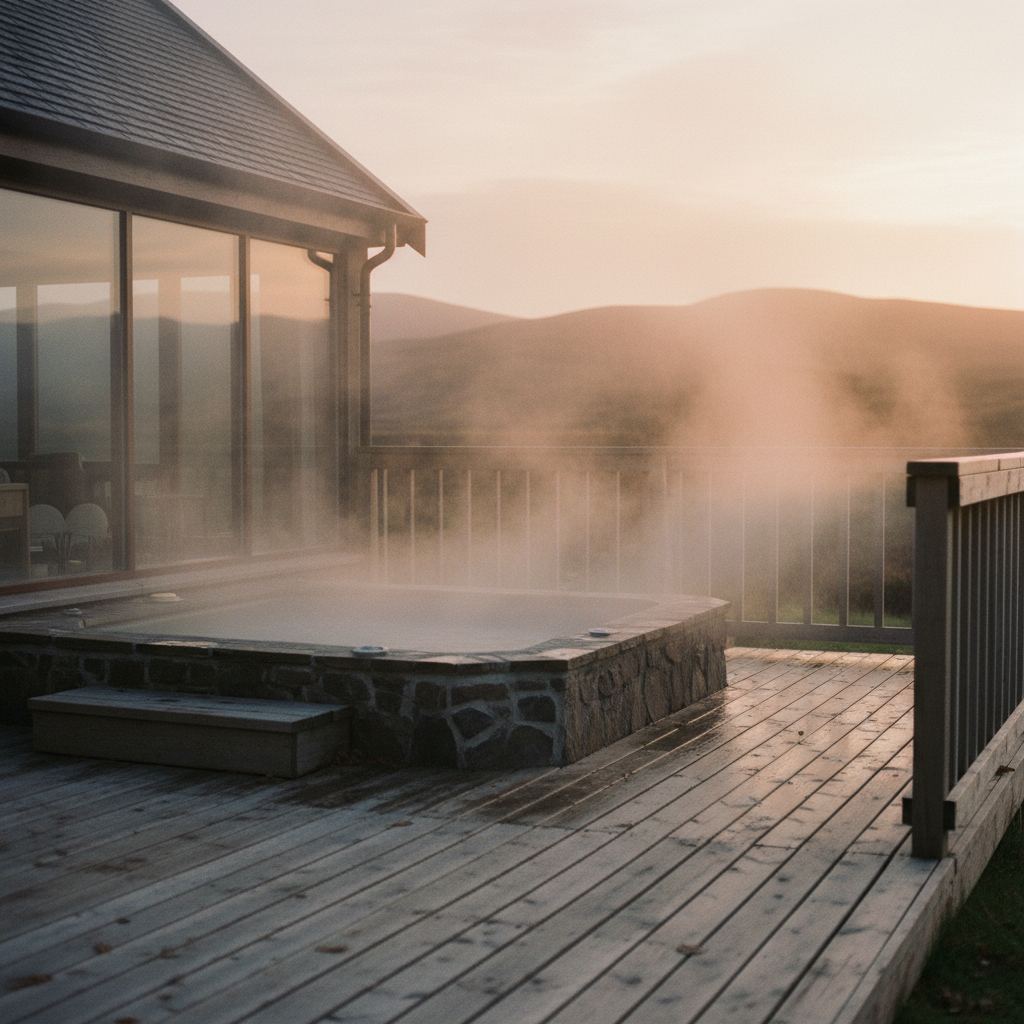
Start with the tub itself. “Hot tub included” covers a huge range, from a proper eight-seater on a secluded deck to a battered inflatable wedged into a corner of a shared garden. The good ones share three traits: it’s exclusive to your booking, it’s outside (or at least open to the air — an indoor hot tub with the windows shut defeats half the point), and it’s positioned so you’re not staring at next door’s bins while you soak.
Then there’s the setting. A hot tub in a car park is still a hot tub, technically, but the ones worth remembering are the ones where you step out of the water into somewhere quiet — a valley, a treeline, a bit of coastal dark. That’s the whole trick of a hot tub break: contrast. Cold air, hot water, nowhere you need to be.
We’ve put together the full list of the hot tub lodges we rate across the country, if you want to skip straight to browsing.
A hot tub earns its keep the moment the temperature drops below the point where being outdoors is fun any other way.
Built-in versus inflatable — does it matter?
It does, more than people expect before they’ve experienced both. A proper built-in tub — hard-shell, moulded seating, a lid that actually insulates — holds its heat evenly and copes with a full group without the temperature sagging. An inflatable “lodge hot tub” can be perfectly pleasant for a couple, but pack six people into one on a cold night and you’ll notice the water cooling by the time everyone’s settled in. If the listing photos show an inflatable ring rather than a hard shell, it’s not a dealbreaker, just something to factor into how many people you bring and how long you expect the heat to last.
Size matters too, and not just for comfort. A tub rated for four with six adults in it runs hotter on the filtration system, cools faster once you’re all displacing water, and simply isn’t as nice — elbows everywhere, nowhere to stretch out. Match the tub’s rated capacity to your actual group before you fall for a lodge on looks alone.
Who’s this kind of break actually for?
Genuinely, most people — that’s part of the appeal. Couples get privacy and a proper occasion out of it. Families get an evening activity that doesn’t involve a screen, and most kids think a hot tub after a wet walk is the best part of the whole holiday. Groups of friends get a shared, unhurried evening that a pub trip doesn’t quite replicate. The one group it suits least is anyone wanting a fast-paced, activity-packed weekend — a hot tub break rewards slowing down, and if that’s not what you’re after, you’ll get more out of a different kind of trip entirely.
Which UK region actually suits a hot tub weekend?
This is where people overthink it. You don’t need the “best” region in some abstract sense — you need the one that matches what you want the daytime to look like, because the tub itself is roughly as good wherever you go.
| Region | Best for | Watch out for |
|---|---|---|
| Lake District | Big fell walks finished off properly | Windermere gets packed in summer; book the shoulder months if you can |
| Scotland | Genuine wilderness, dark skies, real distance from anywhere | Longer drive for most of England; midges May–August if you’re outdoors at dusk |
| Cornwall | Coast paths, storm-watching, milder winters | Narrow lanes get slow in peak season; the coast can be busy in August |
| Yorkshire | Dales and moors without the Lake District prices | Weather turns fast on open moorland — pack for it |
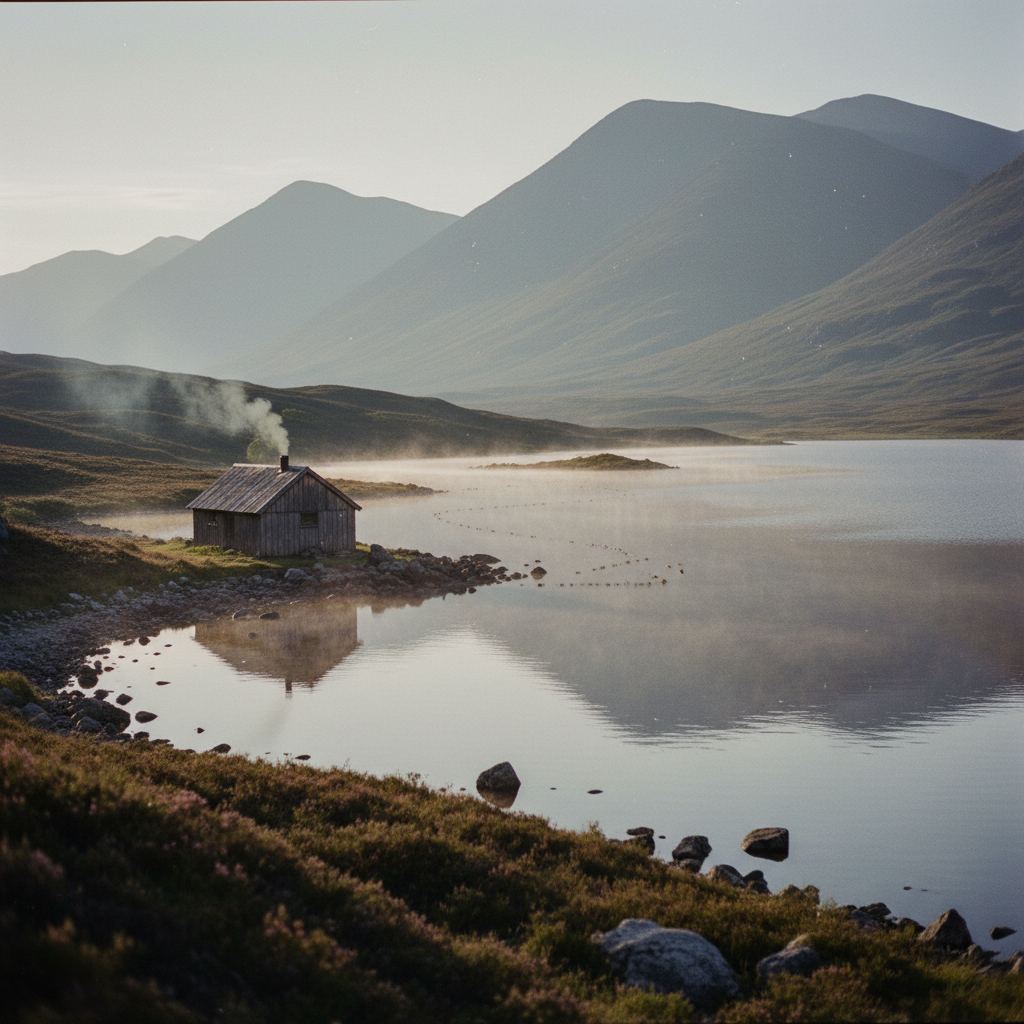
None of these is objectively “the winner.” We’d send a couple wanting total seclusion and a long moody walk towards Scotland’s glens; a family wanting rock pools and a pasty on the way home towards Cornwall; a group who want a proper pub within walking distance towards the Dales or the Lakes.
Go a layer deeper and each region rewards a slightly different kind of day. The Lake District suits people who want the walk to be the main event and the tub to be the reward at the end of it — fell paths from Keswick and Ullswater are as good as UK walking gets, and a lodge tucked off the Windermere crowds gives you both without the queues. Scotland asks more of you logistically — it’s a longer drive for most of the country — but pays it back with genuine wilderness; the Cairngorms and Argyll offer proper dark-sky nights where a hot tub under an unpolluted sky becomes the whole point of going. Cornwall trades big mountains for coast: storm-watching on the north coast around Bude, gentler walks around the Roseland, and a noticeably milder climate that makes an out-of-season trip more comfortable than you’d expect. Yorkshire sits in between — proper moorland and dale scenery without Lake District prices, plus Whitby and the coast if you want a change of pace mid-trip.
Is a hot tub break any good with a dog?
Yes, with one important caveat: the dog and the tub don’t mix, ever. Keep your dog well clear of the water — chemically treated, often close to 38°C, and not somewhere any dog should be swimming or drinking from. Beyond that, a dog friendly lodge with a hot tub is one of the strongest combinations in UK self-catering: you get your walk in the day, and the dog gets to flop by the wood-burner while you’re outside in the tub come evening.
Check the property’s actual pet policy before booking rather than assuming — “dog friendly” ranges from one well-behaved dog free of charge to a strict two-dog cap with a cleaning supplement. If dogs are the main point of the trip, our dog friendly cottages guide is worth a look alongside the hot tub listings.
When’s the best time of year to go?
Short answer: autumn and winter, and it isn’t close. We’ve written a full month-by-month breakdown of the best time of year for a hot tub break if you want the detail, but the logic is simple — the colder the air, the better the contrast, and the cheaper the same lodge tends to be outside the school-holiday weeks.
Summer hot tubs are pleasant. Winter hot tubs, with your breath fogging and frost on the decking, are the ones people actually talk about afterwards.
What are the unwritten rules of a shared hot tub weekend?
Even a “private” hot tub is usually shared between everyone in your group, so a few basics keep it pleasant rather than grim:
- Shower before you get in. Suncream, sweat and hair product all feed algae and cloud the water faster than you’d think.
- No glass near the tub. Most providers ban it outright, and a broken glass in a hot tub means the whole thing gets drained.
- Check the temperature and cover instructions on arrival. Most UK operators service the water chemistry before you check in, but you’re usually responsible for the cover and jets during your stay — read the card they leave you.
- Don’t overfill it with people. A tub rated for six with ten people in it isn’t fun for anyone, and it isn’t what you paid for either.
- Ease in and out if you’ve had a drink. Hot water and alcohol are a genuinely bad combination — dizziness in a tub is no joke.
- Rinse off after, not just before. Chlorinated or bromine-treated water can leave skin feeling tight; a quick shower afterwards makes a real difference, especially if you’re planning a second soak the next evening.
- Report a fault immediately, not on day three. If the water’s cloudy, cold, or the jets aren’t working, tell the provider straight away — most can fix it fast, but only if they know, and it’s a much easier conversation before you’ve been living with it for two days.
None of this is complicated, but it’s the difference between a relaxed weekend and a passive-aggressive group chat afterwards.
What’s actually included, and what does it cost to run?
Almost always, the hot tub itself is included in the headline price — you’re not usually paying extra to use it once you’ve booked a lodge advertised with one. What varies is who’s responsible for what. Most UK operators service and heat the tub before you arrive, so the water’s ready and the chemistry’s been checked; you’re generally just responsible for the cover, the jets, and not letting the temperature drop by leaving the lid off for an hour while you nip out. A smaller number of self-managed properties expect you to top up chemicals yourself over a longer stay — if that’s the case, it’ll be spelled out in the booking information, and it’s worth reading before you commit to more than a long weekend.
On price: expect wide swings by region and season rather than a fixed “hot tub premium.” A lodge with a tub costs more than an equivalent one without, but the bigger factor by far is when you go — the same property can be genuinely half the price in November compared with an August bank holiday. Always check live pricing on the provider’s own site for your actual dates rather than trusting a number you saw somewhere else; availability calendars move fast for anywhere popular.
How do I avoid picking a dud?
A few red flags, from having looked at rather a lot of listings: photos that only show the tub from one flattering angle (ask for more), reviews that mention “the hot tub wasn’t working” more than once, and listings vague about whether the tub is genuinely private. If a description says “hot tub” but every photo is of the living room, that’s not an accident.
Also worth a look: how recent the reviews actually are. A lodge with glowing five-star reviews from three years ago and nothing since could simply be under new, worse management, or the tub could have quietly stopped being serviced properly. A steady trickle of recent reviews mentioning the hot tub specifically — not just “lovely cottage” — is a decent sign someone’s actually checking on it.
We haven’t stayed at every property we list — nobody honestly can, across a country this size — but we do read the reviews properly, check the pet policy against what’s advertised, and drop anything that looks like it’s coasting on old photos. Our full editorial approach is here if you want the detail.
Is a hot tub safe for everyone in the group?
Mostly, yes, with a bit of common sense. Hot tubs typically sit around 37-39°C, which is fine for most healthy adults for a reasonable soak, but anyone pregnant, managing a heart condition, or on medication that affects blood pressure should check with their GP before booking a trip built around one — this isn’t a case where “probably fine” is good enough. Young children can usually join for a short, supervised dip at a lower temperature if the property allows it, but check the specific policy, since plenty of tubs are adults-only for insurance reasons. And however tempting it is after a long walk, don’t stay in for hours at a time — twenty minutes or so, then a break, is the sensible rhythm rather than a full evening submerged.
How far in advance should you actually book?
Depends entirely on when you’re going and where. A summer weekend in the Lake District or Scotland’s more popular glens can sell out the genuinely good properties six to nine months ahead — if a specific lodge in a specific week matters to you, book as soon as you know the dates. Winter weekdays, by contrast, are often bookable a fortnight out with plenty of choice, since demand simply isn’t there in the same way.
The middle ground — a winter Saturday, or any date near a bank holiday or half-term — sits somewhere in between and rewards booking a couple of months ahead rather than leaving it to chance. If your dates are flexible, that flexibility is worth real money: shifting a trip from a Saturday-Sunday to a Sunday-Monday, or from half-term week to the week either side of it, can open up properties that looked fully booked and drop the price at the same time.
What kind of place should you actually book?
A hot tub holiday in the UK comes in more shapes than the listings suggest. At the cosy end are timber lodges and log cabins with a private tub on the deck — the classic version, and the one most of our hot tub lodges fall into. Big holiday parks offer lodges with hot tubs too, handy for families who want a pool and a bar on site, though they trade seclusion for convenience. For something quieter, a shepherd’s hut or a glamping pod in a meadow gives you the same soak with more of the outdoors around it.
Luxury lodges add a sauna and a second bathroom for the weekend breaks where the accommodation is half the point. Wherever you go — the Lakes, Scotland, an idyllic corner of the Isle of Wight, or a beach-close bolt-hole in Cornwall — the idea is the same: somewhere to unwind after the day, one of the simplest getaways left in the country. Most of these breaks in the UK are dog friendly too, so the whole household comes along.
A few honest truths before you book
The best hot tub weekends are the ones nobody spends the whole time trying to make Instagrammable. Book somewhere quiet, bring good boots for the day and something warm for the walk back to the tub, and let the setting do the work.
A hot tub doesn’t fix a bad location — it just makes a good one better. Don’t book on the tub alone; book on the tub plus somewhere you’d genuinely want to spend the daylight hours.
If you’re ready to browse, start with our full list of UK hot tub lodges, or head straight to whichever region matches your trip — the Lakes, Scotland, Cornwall or Yorkshire. Wherever you land, the formula barely changes: a genuinely private tub, a setting worth the daylight hours, and a season cold enough to make the water feel like it’s earned its place in the trip, and a dog by the fire if you’ve brought one along.